

Parenting in today’s fast-paced society is a monumental task. Parents are pulled in countless directions, juggling workplace responsibilities, relationships, family needs, and social expectations. Amid these demands, it is common for parents to neglect their own needs, feeling guilty when they cannot achieve at an “optimal” level at all times. Over time, this lack of balance can lead to chronic fatigue, burnout, and a sense of defeat.
In light of such pressures, establishing healthy boundaries for parents is essential. Boundaries allow parents to maintain a sense of control, create space for self-care, and live in alignment with their values. This guide explores what boundaries are, why they matter, how parents can set them, and strategies to maintain them in everyday life.
Are Your Boundaries Serving You?
Take a moment to reflect on your current parenting experience by considering the following questions:
-
Are you able to enjoy your life as a parent?
-
Do you feel like you are constantly running from one task to another?
-
Do you have time to meet your own needs?
-
How tired do you feel on a daily basis?
-
Are you living your life according to your priorities, values, and beliefs?
As you ponder these questions, consider how boundaries can help you adjust your approach, reduce stress, and increase fulfillment.
What Are Boundaries and Why Are They Needed?
Personal healthy boundaries are the limits and rules that individuals set for themselves within relationships, interactions and communication with others. These healthy boundaries define what is and is not acceptable behavior from others. Also, they help to protect an individual’s physical, emotional and mental well-being. They can include setting limits on physical touch, emotional intimacy, time, finances and personal space, as well as setting rules for communication, decision-making, and problem-solving. Personal boundaries can vary from person to person, and it is important for individuals to communicate and respect each other’s boundaries in any relationship.
What Are Boundaries and Why Are They Needed?
Personal boundaries are the limits and rules that individuals set for themselves within relationships and interactions. They define what behavior from others is acceptable and protect a person’s physical, emotional, and mental well-being. Boundaries can apply to physical touch, emotional intimacy, time, finances, personal space, communication, decision-making, and problem-solving.
Boundaries are particularly important for parents because they not only protect the parent’s well-being but also model healthy relationship dynamics for children. Children learn from observing their parents how to communicate needs, manage conflict, and respect limits in their own relationships.
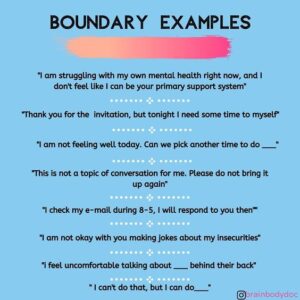
Types of Boundaries Parents Should Consider
Understanding the types of boundaries can help parents identify areas where limits are needed. While boundaries may vary depending on personal circumstances, some key areas for parents include:
Emotional Boundaries
-
Knowing when to step back from emotionally draining conversations.
-
Protecting your mental space from guilt, criticism, or manipulation.
-
Example: Politely declining extended family discussions that leave you emotionally exhausted.
Time Boundaries
-
Deciding how much time to spend on various obligations.
-
Ensuring personal downtime is scheduled alongside parenting duties.
-
Example: Allocating specific hours for work, playtime with children, and self-care.
Decision-Making Boundaries
-
Determining the level of control others have over your life and choices.
-
Example: Not allowing friends, family, or coworkers to dictate parenting decisions that conflict with your values.
Problem-Solving Boundaries
-
Protecting your energy when helping others with challenges.
-
Example: Telling a child, spouse, or family member that you can help later but need to finish your own priorities first.
Work Boundaries
-
Setting limits on work hours and responsibilities to prevent burnout.
-
Example: Not checking emails after a set time, or delegating tasks to avoid overcommitment.
Social Boundaries
-
Managing social interactions and commitments.
-
Example: Declining invitations or group activities that drain energy or conflict with family time.
By reflecting on these areas, parents can begin identifying which boundaries need attention and adjustment.
The Cost of Poor Boundaries
Without clear boundaries, parents are at risk of experiencing:
-
Emotional strain: Chronic stress, irritability, and anxiety can result from feeling overwhelmed or overextended.
-
Physical fatigue: Sleep disturbances, tension, and general exhaustion often accompany boundary neglect.
-
Relationship conflict: Resentment can develop toward partners, children, or other family members.
-
Loss of personal identity: Parents may feel defined solely by their caregiving responsibilities, with little connection to personal values and goals.
Rigid, Porous, and Healthy Boundaries
Boundaries exist along a spectrum. Understanding where you fall can help you create a healthier balance.
Rigid Boundaries
-
Characterized by strict and inflexible rules.
-
Can lead to difficulty trusting others and an inability to express needs or receive support.
-
Example: Refusing all help from family, even when overwhelmed.
Porous Boundaries
-
Overly flexible or weak limits.
-
May allow others to infringe on your time, energy, or emotional well-being.
-
Example: Saying yes to every request, leaving no room for personal self-care.
Healthy Boundaries
-
Balanced and flexible, yet protective of personal needs.
-
Encourage honest communication, respect, and self-care.
-
Example: Setting work hours, prioritizing family time, and scheduling self-care without guilt.
Healthy boundaries are guided by personal values and needs rather than external expectations or societal pressure.


Practical Steps to Set Healthy Boundaries for Parents
1. Identify Your Values and Priorities
Knowing what matters most allows you to set boundaries aligned with your personal and family goals.
2. Communicate Clearly
Use “I statements” to express needs without blame:
-
“I need 30 minutes to myself after work to recharge before helping with homework.”
3. Schedule Self-Care
-
Include daily or weekly time blocks for rest, hobbies, exercise, or relaxation.
-
Treat these appointments with the same importance as work or school commitments.
4. Learn to Say No
-
Practice declining requests that conflict with your priorities.
-
Remember, saying no does not make you a bad parent—it protects your ability to parent effectively.
5. Enlist Support Systems
-
Share responsibilities with partners, family members, or friends.
-
Example: Carpooling, meal prep, or alternating childcare duties.
6. Model Boundaries for Children
-
Show children that it is healthy to express needs and limits.
-
Example: Respecting your child’s need for privacy or downtime, and expecting the same for yourself.
7. Set Workplace Boundaries
-
Negotiate flexible hours or remote work options when possible.
-
Avoid overextending by managing expectations and workloads.
-
Internal Link Suggestion: Learn more about workplace support and stress management at Crystal Waters Counseling Centers.
Overcoming Challenges in Setting Boundaries
Parents often face internal and external obstacles:
-
Guilt: Feeling selfish for taking time for oneself.

-
Fear of disappointing others: Wanting to meet everyone’s expectations.
-
Cultural pressures: Societal expectations of “perfect parenting.”
-
Family-of-origin patterns: Replicating boundaries modeled during childhood.
Strategies to overcome these challenges include journaling, seeking therapy, practicing mindfulness, and reinforcing the positive outcomes of healthy boundaries.
How Therapy Can Support Healthy Boundaries
Therapy can be a safe space to:
-
Explore personal values and parenting priorities.
-
Learn coping strategies for guilt, stress, or anxiety.
-
Practice assertive communication and conflict resolution.
-
Engage in family therapy to align household expectations and support boundary-setting.
At Crystal Waters Counseling Centers, services such as anxiety counseling, parent resources, and therapy for adults and families provide practical tools for parents working to reclaim balance in their lives.
FAQs: Healthy Boundaries for Parents
1. Why do parents struggle with setting boundaries?
Parents often struggle due to guilt, societal expectations, fear of disappointing children or family members, and the pressure to be constantly available. Therapy and support can help parents identify and reinforce their needs.
2. How can I set boundaries without feeling guilty?
Start small with manageable limits. Communicate clearly, use “I statements,” and remind yourself that boundaries improve your ability to care for your family.
3. What are examples of healthy boundaries with children?
-
Limiting screen time for both parent and child.
-
Scheduling personal downtime for parents while maintaining family routines.
-
Teaching children to respect privacy and personal space.
4. Can therapy help me set boundaries with family or at work?
Yes. Therapy provides tools for assertive communication, stress management, and conflict resolution, which can be applied across family, workplace, and social situations.
5. How do I know if my boundaries are too rigid or too flexible?
-
Rigid boundaries: You feel isolated, inflexible, or distrustful of others.
-
Porous boundaries: You feel overwhelmed, resentful, or drained.
-
Healthy boundaries: You feel empowered, balanced, and able to communicate needs while maintaining connections.
Boundaries & Guilt
Try not to feel guilty for prioritizing yourself as setting healthy boundaries. As a mother, children and their needs often come first leaving little time to meet your own. Remember, that you cannot be present for your child if you are not present for yourself. You are a role model to your children. You can show them the importance of balancing the needs of the family, work and your own.
By considering the boundaries from the various aspects of your life, you can free up time and energy. This will lead to a stronger sense of self-worth, functionality and ability to ENJOY YOUR LIFE!

Final Thoughts
Setting healthy boundaries for parents is not an act of selfishness—it is an essential step toward balance, joy, and effective parenting. Boundaries allow parents to protect their physical, emotional, and mental health while modeling self-respect for their children.
Parents are encouraged to:
-
Identify personal values and priorities.
-
Communicate needs clearly.
-
Schedule time for self-care.
-
Seek support when needed.
-
Model healthy boundaries for children.
By taking these steps, parents can reduce stress, avoid burnout, and create a home environment where both parents and children thrive.
If you are struggling with stress, anxiety, or difficulty setting boundaries as a parent, Crystal Waters Counseling Centers in Maryland offers supportive therapy services tailored to your needs. Our team can help you build practical strategies, improve self-care, and create a balanced, fulfilling life for yourself and your family.
Contact us today to begin reclaiming your time, energy, and peace of mind.
Start Therapy to Set Boundaries, Manage Anxiety & Balance Your Life in Baltimore, MD
If you are wanting to get additional support then we can help. Our therapists specialize in treating anxiety in children. We can help them learn valuable skills that will help them cope in healthy ways throughout their life. To get started, follow these steps.
- Reach out for a free consultation at our Baltimore area therapy practice
- Schedule your first appointment for therapy
- Learn how to navigate motherhood, work through stressors and improve your overall quality of life.
Other Therapy Services We Offer in Maryland & the Washington DC Area
At Crystal Waters Counseling Centers we offer a variety of in-person and online therapy services. They are available for children, teens, college students, women, and adults throughout Maryland. This includes counseling for both anxiety and depression. As well as EMDR Therapy, therapy for life transitions, and parent coaching.