


When people ask, how trauma affects the nervous system, they are usually searching for answers to why their body feels “off” even when life seems safe. Trauma is not just the event—it is the body’s response to that event. The nervous system changes the way it is functioning, often long after the danger has passed. It can be or Big T or Little t:
Big T Trauma
-
Physical or sexual assault
-
Serious accidents
-
Military combat
-
Natural disasters
-
Sudden loss
Little t Trauma
-
Emotional neglect
-
Chronic criticism
-
Growing up in conflict or chaos
-
Divorce or separation
-
Bullying
-
Medical trauma
Many adults seeking trauma therapy in Maryland may say, “Nothing that bad happened.” But trauma is not measured by comparison—it is measured by whether your nervous system became overwhelmed. What feels small to one person can still create lasting nervous system changes.
Nervous System Basics: How Trauma Changes the Body
Understanding how trauma affects the nervous system starts with the basics.
Your autonomic nervous system has two main parts:
Sympathetic Nervous System: Fight or Flight
This system is like the gas pedal. It activates when the brain senses danger, releasing adrenaline and increasing heart rate, blood flow to muscles, and alertness. This prepares the body to fight or run from threat.
Parasympathetic Nervous System: Rest and Digest
This system is the brake pedal. It promotes relaxation, digestion, sleep, and social connection. A healthy nervous system balances activation and rest.
Trauma can make this system unbalanced, leaving the body either in a chronic state of activation or shutdown.
The Window of Tolerance and Trauma’s Effects on Emotional Regulation
The Window of Tolerance, a concept introduced by psychiatrist Dan Siegel, describes the zone where a person can feel calm, present, and regulated.
When trauma affects the nervous system, this window often narrows. Many clients quickly move into:
Hyperarousal: Fight or Flight Activation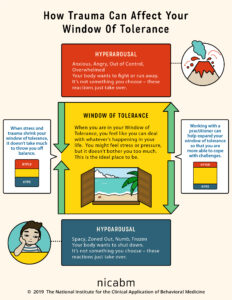
-
Racing thoughts
-
Panic or anxiety attacks
-
Irritability or anger outbursts
-
Insomnia
-
Hypervigilance
Many searching for hypervigilance symptoms don’t realize it is a trauma response.
Hypoarousal: Freeze or Shutdown
-
Numbness or disconnection
-
Brain fog
-
Emotional shutdown
-
Withdrawal from social situations
-
Difficulty making decisions
At Crystal Waters Counseling Centers, we help adults and teens expand their Window of Tolerance through trauma therapy and teen therapy.
Polyvagal Theory: Understanding How Trauma Affects the Nervous System
Neuroscientist Stephen Porges developed Polyvagal Theory, explaining how the nervous system senses safety or danger.
-
When safety is detected: calm, social engagement, and connection are possible.
-
When danger is perceived: fight, flight, freeze, or fawn responses are activated.
Trauma can make neutral events feel dangerous, keeping the nervous system in survival mode even when no real threat exists. Understanding Polyvagal Theory helps reduce shame and fosters compassion for oneself.
Fight, Flight, Freeze, and Fawn: Trauma’s Impact on Behavior
When trauma affects the nervous system, survival responses can become automatic. These patterns are not weaknesses—they are adaptations.
Fight Response
-
Anger outbursts
-
Controlling behavior
-
Irritability
The body feels tense, ready to defend itself. People may seek anxiety counseling thinking it’s a personality flaw.
Flight Response
-
Workaholism
-
Restlessness
-
Perfectionism
-
Avoidance
Many high-achieving adults live in chronic flight mode.
Freeze Response
-
Feeling stuck or indecisive
-
Shutting down during conflict
-
Procrastination
This response is often misinterpreted as laziness but is the nervous system’s way to survive overwhelming stress.
Fawn Response
-
People pleasing
-
Fear of saying “no”
-
Difficulty setting boundaries
Fawn responses often show up in family or workplace dynamics. For parent guidance, explore parent resources.
How Trauma Is Stored in the Body
Trauma is stored as sensation and tension, not just as memory. People often feel trauma in:
-
Chest (tightness or pressure)
-
Stomach (nausea, knots)

-
Jaw (clenching)
-
Shoulders and neck (chronic tension)
-
Head (headaches or migraines)
This is why somatic therapy for trauma can be more effective than talk therapy alone. Somatic therapy helps regulate the nervous system through:
-
Body awareness
-
Breathwork
-
Grounding techniques
-
Gentle movement
-
Bilateral stimulation
Learn more about our somatic therapy for trauma services.
Trauma and the Brain: Long-Term Nervous System Effects
Trauma affects how the brain functions, including:
The Amygdala
Becomes hyper-reactive to threat, increasing fear responses.
The Prefrontal Cortex
Challenges with impulse control and reasoning under stress.
The Hippocampus
Difficulty organizing and processing memories.
These changes explain why trauma and anxiety often overlap. Proper trauma therapy can rewire these pathways over time.
Trauma vs Anxiety: Understanding the Difference
Many wonder how trauma differs from anxiety:
-
Anxiety: Future-focused worry about potential outcomes.
-
Trauma-based anxiety: Triggered by past events, body-based, immediate, and often includes dissociation or hypervigilance.
At Crystal Waters Counseling Centers, understanding this difference guides appropriate anxiety counseling and trauma treatment.
Hypervigilance Symptoms: Always Feeling “On Edge”
Hypervigilance is a state of chronic alertness, common after trauma. People may:
-
Scan for danger constantly
-
Overanalyze others’ reactions
-
Anticipate worst-case scenarios
-
Struggle to relax
While hypervigilance can be exhausting, it is a nervous system adaptation aimed at safety.
Dissociation Symptoms: When the Body Shuts Down
Dissociation occurs when the nervous system temporarily “disconnects” from overwhelming stress. Common signs:
-
Spacing out or feeling detached
-
Losing track of time
-
Observing yourself from outside your body
Dissociation protects the nervous system but can interfere with daily life, relationships, and emotional health.
Can the Nervous System Heal After Trauma?
Yes. The nervous system is adaptable and capable of recovery. Through neuroplasticity, the brain can form new pathways that support safety and regulation.
Healing focuses on:
-
Building safety in relationships
-
Expanding the Window of Tolerance
-
Learning nervous system regulation techniques
-
Gradually processing traumatic memories
Healing is not about “forgetting” trauma but helping the nervous system learn that danger has passed.
Nervous System Regulation Techniques
Practical strategies that help regulate the nervous system include:
-
Breathing with a longer exhale than inhale
-
Grounding with feet on the floor
-
Humming or chanting to stimulate the vagus nerve
-
Cold water on the face for physiological reset
-
Gentle movement and stretching
-
Mindfulness of body sensations
For teens and children, these skills are integrated into teen therapy sessions.
Childhood Trauma Effects in Adulthood
Childhood trauma can influence adult nervous system function:
-
Fear of abandonment
-
Emotional reactivity
-
Hyper-independence
-
Difficulty trusting others
-
Chronic shame
Trauma therapy in Maryland can help adults reconnect with safety and emotional balance.
Trauma Therapy in Baltimore Maryland: Crystal Waters Counseling Centers Approach
At Crystal Waters Counseling Centers, trauma therapy focuses on:
-
Building safety first
-
Education about how trauma affects the nervous system
-
Somatic therapy
-
EMDR therapy
-
Attachment repair
-
Culturally informed care
We help clients gradually learn regulation, process trauma, and move from survival to stability.
Explore our trauma therapy in Baltimore Maryland services or anxiety counseling options.
Signs You May Benefit from Trauma Therapy
-
Chronic anxiety or panic
-
Hypervigilance symptoms
-
Dissociation or emotional shutdown
-
Avoidance of conflict
-
Explosive reactions or irritability
-
Difficulty relaxing or sleeping
These are not weaknesses—they are nervous system adaptations.
Frequently Asked Questions: How Trauma Affects the Nervous System
Can trauma permanently damage the brain?
Trauma can change brain function, but neuroplasticity allows healing and new neural pathways.
Why do I freeze during conflict?
Freezing is a survival response. Your nervous system learned this reaction when danger was overwhelming.
Why does my body react before my mind?
The nervous system responds to threat faster than conscious thought. Trauma strengthens this automatic response.
How long does nervous system healing take?
Healing varies. Many notice small improvements within weeks; deeper regulation develops over months.
You Are Not Broken: Healing from Trauma
Your anxiety, shutdown, or people-pleasing were once survival strategies. Now, with guidance and trauma-informed therapy, your nervous system can learn to feel safe, connected, and steady.
For Extra Help, Reach Out!
If you want to get additional support then we can help. Our therapists are here to help you. We can help them learn valuable skills that will help them cope in healthy ways throughout their life. Follow these steps to get started.
- Reach out for a free consultation at our therapy practice
- Schedule your first appointment for therapy
- Then, learn how to navigate symptoms of anxiety, work through stressors and improve your overall quality of life
Other Therapy Services We Offer in Maryland & the Washington DC Area
At Crystal Waters Counseling Centers we offer a variety of in-person and online therapy services. Specifically, they are available for children, teens, college students, women, and adults throughout Maryland. In addition, this includes counseling for both anxiety and depression as well as EMDR Therapy, therapy for life transitions, and parent coaching.
Written by Diane Brumfield, M.Ed, LCPC-S, NCC – Clinical Director of Crystal Waters Counseling Centers, where she specializes in anxiety counseling, stress management, and trauma-informed somatic therapy.