
Understanding the Window of Tolerance and Trauma
When people ask “what is the window of tolerance?” they often notice that their emotions feel overwhelming or shut down.
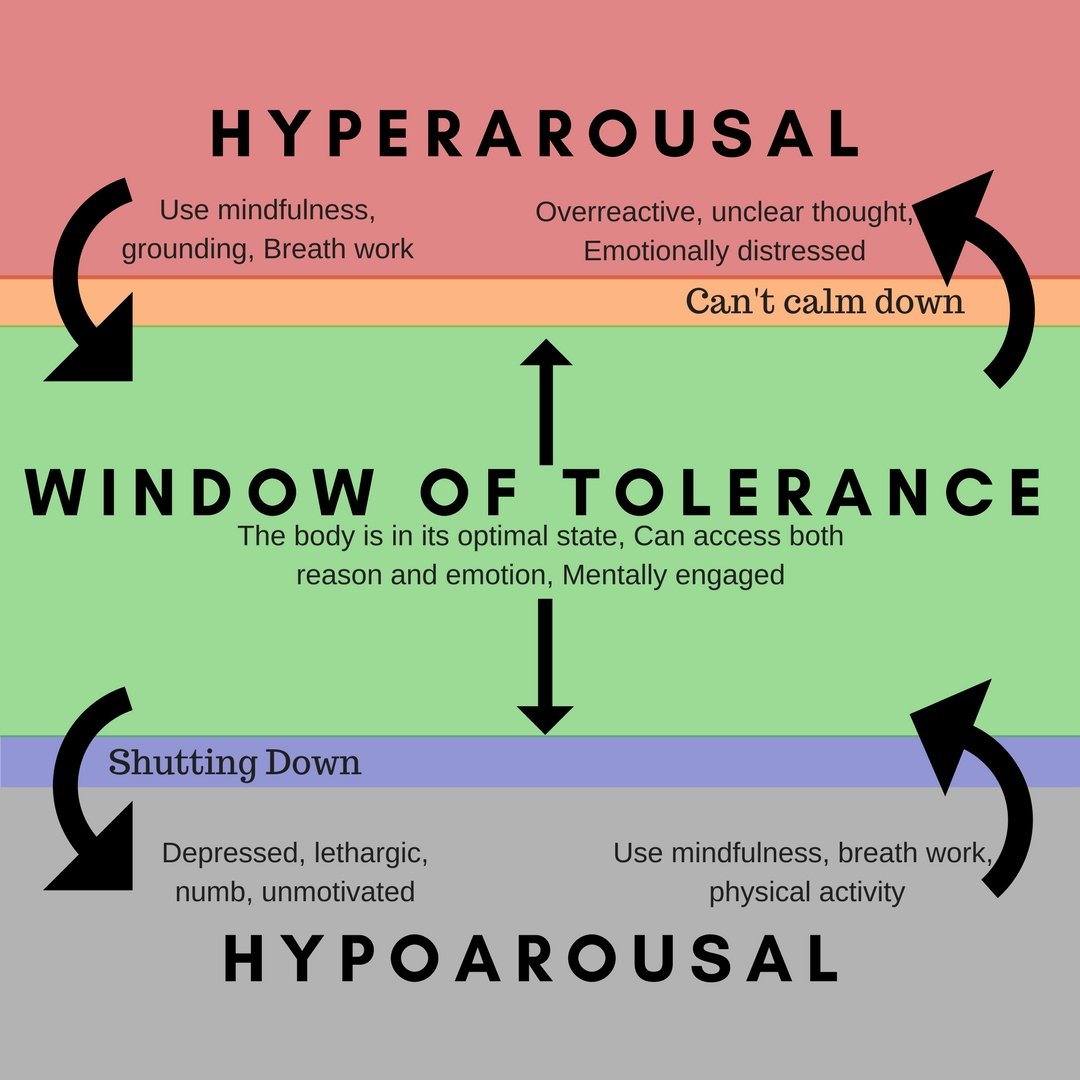
The window of tolerance is a term coined by psychiatrist Dan Siegel. It describes the range of emotional states where a person can:
-
Stay calm and alert
-
Think clearly
-
Respond to stress rather than react impulsively
-
Feel safe and connected
When trauma affects the nervous system, this window can narrow, meaning even small stressors can push someone into fight, flight, or freeze states.
If you want to explore how trauma affects the nervous system more deeply, check out our pillar blog on how trauma affects the nervous system.
How Trauma Narrows the Window of Tolerance
Trauma, whether from childhood or adulthood, changes how your nervous system responds to stress.
When the window of tolerance is narrowed:
-
Minor triggers feel overwhelming
-
You may go from calm to anxiety in seconds
-
You may shut down, dissociate, or feel numb
-
Emotional regulation becomes difficult
Case Example:
A client named “Maya” (not her real name) came to therapy after noticing she felt completely frozen when her teenage son argued with her. Even small disagreements would leave her heart racing and mind blank. Understanding that her nervous system was reacting to past trauma helped her feel less ashamed and begin practicing regulation techniques.
Hyperarousal and the Window of Tolerance
One side of the window of tolerance is hyperarousal, which happens when the nervous system is over-activated.
Signs of hyperarousal include:
-
Racing heart
-
Panic or anxiety attacks
-
Irritability or anger
-
Hypervigilance
-
Difficulty sleeping
People experiencing hyperarousal are often in fight or flight mode, even when danger is not present. This is a common pattern in adults seeking trauma therapy in Baltimore Maryland.
Expert Note: Hyperarousal is your nervous system attempting to protect you. Learning regulation strategies does not erase the response—it retrains it safely.
Hypoarousal: When the Nervous System Shuts Down
On the other side of the window is hypoarousal, or the “freeze” response.
Signs of hypoarousal include:
-
Numbness or emotional shutdown
-
Brain fog
-
Feeling detached from reality
-
Low energy or fatigue
-
Avoiding social situations
Case Example:
“James,” a young adult, described feeling disconnected during stressful work meetings. While his colleagues were debating or raising concerns, he felt like he was observing from a distance. Therapy helped him recognize this freeze response as a nervous system adaptation from childhood trauma and gave him tools to re-engage safely.
Hypoarousal is the nervous system’s way of coping with overwhelming stress, but it can make daily life and relationships challenging.
How the Window of Tolerance Relates to Fight, Flight, Freeze, and Fawn
When trauma affects the nervous system, the window of tolerance helps explain why people react differently to stress:
-
Fight: Over-activated, aggressive response
-
Flight: Anxiety, restlessness, overworking to escape stress
-
Freeze: Shutdown, dissociation, difficulty acting
-
Fawn: People-pleasing or avoiding conflict to stay safe
Understanding your patterns helps in therapy and self-regulation. At Crystal Waters, we incorporate nervous system education into every trauma therapy session.
Signs Your Window of Tolerance May Be Narrowed
You may benefit from learning how to expand your window of tolerance if you notice:
-
Strong emotional reactions to small triggers
-
Feeling “stuck” or unable to act
-
Constant anxiety or worry
-
Difficulty calming down after stress
-
Trouble connecting with others
These are not personal flaws—they are survival adaptations caused by trauma.
How Therapy Can Help Expand the Window of Tolerance
Trauma therapy in Baltimore can help widen the window of tolerance through:
1. Nervous System Regulation
Therapists teach practical skills to self-soothe and reconnect the body and mind, like:
-
Breathwork
-
Grounding exercises
-
Gentle movement
-
Humming or vocalization
2. Somatic Therapy
Somatic therapy helps you notice how your body stores stress and release it safely. Learn more about somatic therapy for trauma.
3. EMDR and Memory Processing
EMDR therapy helps process traumatic memories so they no longer trigger extreme nervous system responses.
4. Safe Relationship and Co-Regulation
Therapy provides a safe connection where the nervous system learns it can relax.
Case Example:
“Mia,” a client struggling with panic attacks, learned slow exhale breathing and grounding techniques in therapy. Over weeks, her nervous system shifted out of hyperarousal more quickly, helping her feel in control of her emotions.
Practical Tips to Widen Your Window of Tolerance
Here are simple, daily practices to expand emotional regulation:
-
Mindful breathing: Slow, deep breaths with longer exhales
-
Grounding exercises: Press feet into the floor, notice sensations
-
Body scan: Check tension in shoulders, jaw, chest
-
Movement: Gentle stretching, walking, or yoga
-
Mindfulness: Notice emotions without judgment
Even small, consistent steps train the nervous system to respond more flexibly to stress.
The Connection Between the Window of Tolerance and Anxiety
Many people seeking anxiety counseling are experiencing a narrowed window of tolerance without realizing it.
Symptoms often include:
-
Chronic worry
-
Panic attacks
-
Emotional outbursts
-
Difficulty calming down
By widening the window of tolerance, anxiety symptoms can decrease because the nervous system learns it is safe.
Childhood Trauma and the Window of Tolerance
Childhood trauma often creates a chronically narrowed window of tolerance, meaning the nervous system reacts strongly to stress in adulthood.
Common adult patterns include:
-
Emotional reactivity
-
Avoidance of conflict
-
Hyper-independence
-
Chronic shame
Therapy helps adults recognize these patterns and safely expand their tolerance for emotions and stress.
Why Understanding Your Window of Tolerance Matters
Knowing your window of tolerance:
-
Reduces shame around emotional reactions
-
Helps identify fight, flight, freeze, or fawn patterns
-
Guides therapy strategies
-
Provides tools for self-regulation
At Crystal Waters Counseling Centers, understanding this concept is a first step in healing from trauma and building resilience.
Frequently Asked Questions About the Window of Tolerance
What happens if my window of tolerance is very small?
You may feel constantly on edge or emotionally shut down. Therapy can help widen it over time.
Can the window of tolerance expand naturally?
Yes, through consistent nervous system regulation, safe relationships, and therapy, the nervous system can learn to tolerate more stress.
Does everyone have the same window of tolerance?
No. Childhood trauma, chronic stress, and genetics all influence it. Therapy is personalized to your needs.
How long does it take to expand the window?
It varies. Some notice changes in weeks, others in months. Consistency with therapy and regulation practices matters most.
Start Healing Your Window of Tolerance Today
If you notice strong emotional reactions, frequent shutdowns, or difficulty managing stress, your window of tolerance may be narrowed due to trauma.
At Crystal Waters Counseling Centers, we specialize in helping clients in Baltimore and Maryland:
-
Understand how trauma affects the nervous system
-
Learn to self-regulate emotions
-
Expand the window of tolerance
-
Build long-term emotional resilience
You Are Not Broken: Healing from Trauma
Your anxiety, shutdown, or people-pleasing were once survival strategies. Now, with guidance and trauma-informed therapy, your nervous system can learn to feel safe, connected, and steady.
For Extra Help, Reach Out!
If you want to get additional support then we can help. Our therapists are here to help you. We can help them learn valuable skills that will help them cope in healthy ways throughout their life. Follow these steps to get started.
- Reach out for a free consultation at our therapy practice
- Schedule your first appointment for therapy
- Then, learn how to navigate symptoms of anxiety, work through stressors and improve your overall quality of life
Other Therapy Services We Offer in Maryland & the Washington DC Area
At Crystal Waters Counseling Centers we offer a variety of in-person and online therapy services. Specifically, they are available for children, teens, college students, women, and adults throughout Maryland. In addition, this includes counseling for both anxiety and depression as well as EMDR Therapy, therapy for life transitions, and parent coaching.
Written by Diane Brumfield, M.Ed, LCPC-S, NCC – Clinical Director of Crystal Waters Counseling Centers, where she specializes in anxiety counseling, stress management, and trauma-informed somatic therapy.